When you’re missing a single tooth, two solid options come up again and again: a single dental implant and a traditional dental bridge. Both restore your smile and your ability to chew — but they work very differently. Here’s an honest, side-by-side look to help you decide.
How each option works
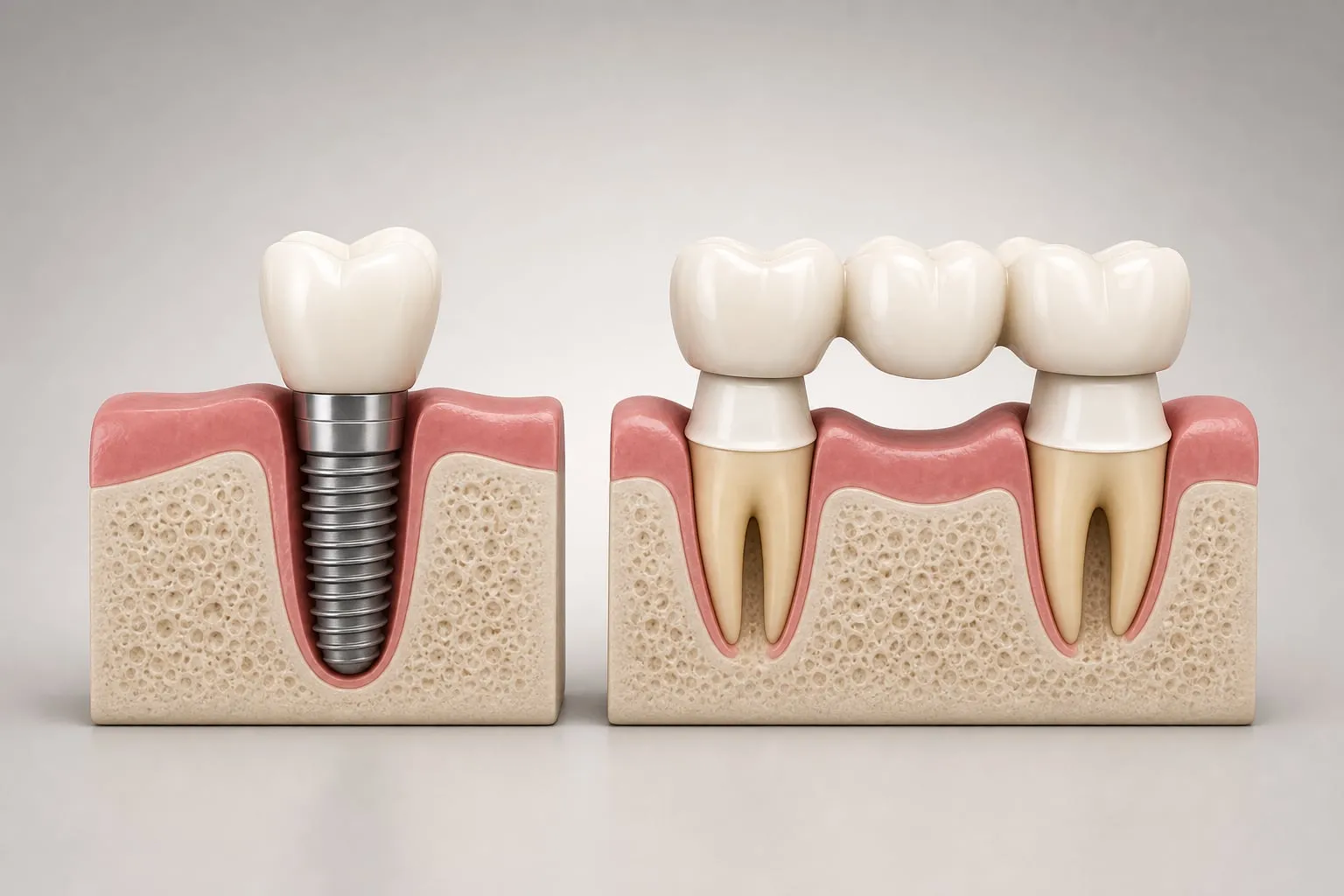
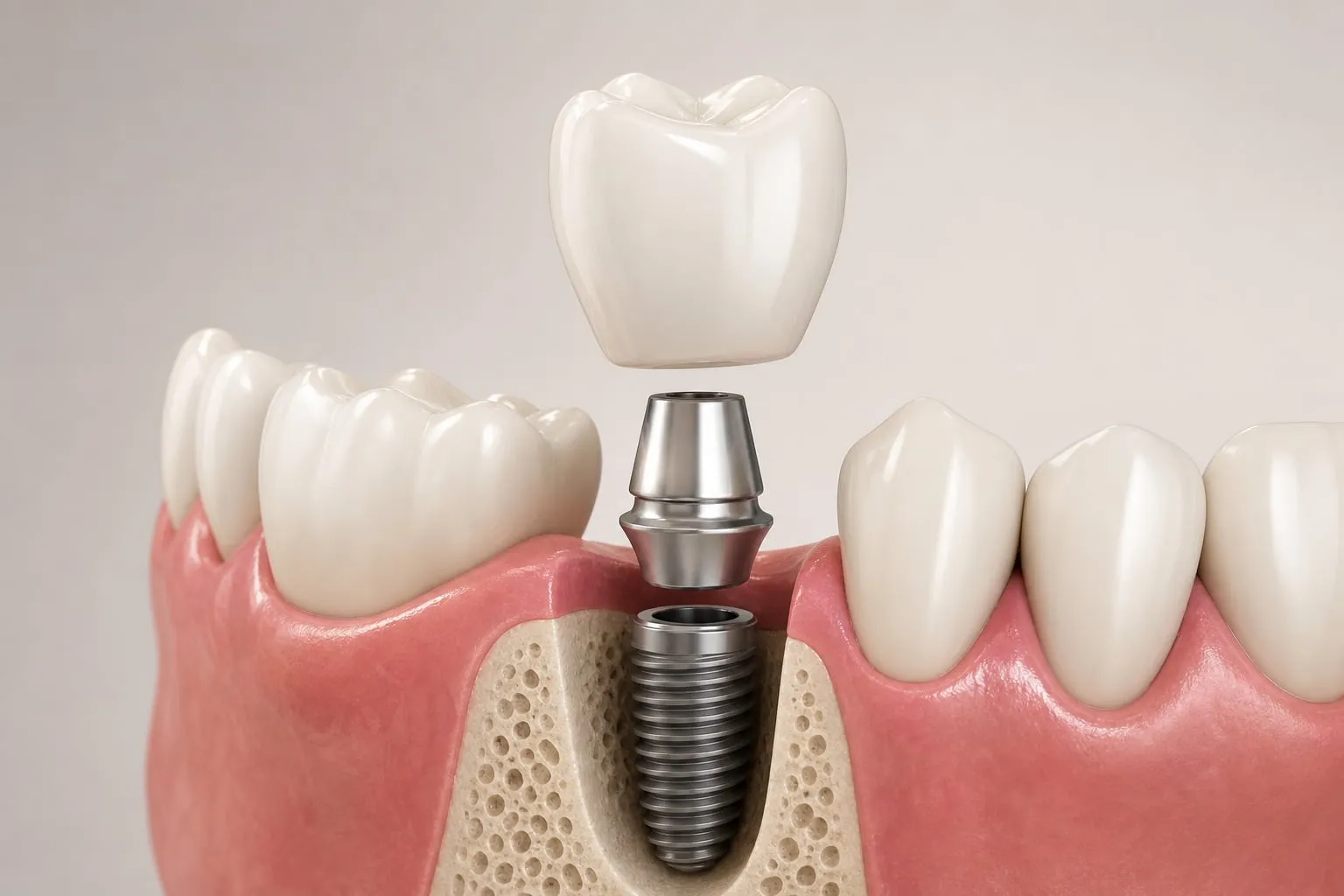
A single dental implant replaces the tooth from the root up. A titanium post is placed in the jaw, and once it integrates, a custom crown is attached on top — a standalone replacement that doesn’t involve the surrounding teeth.
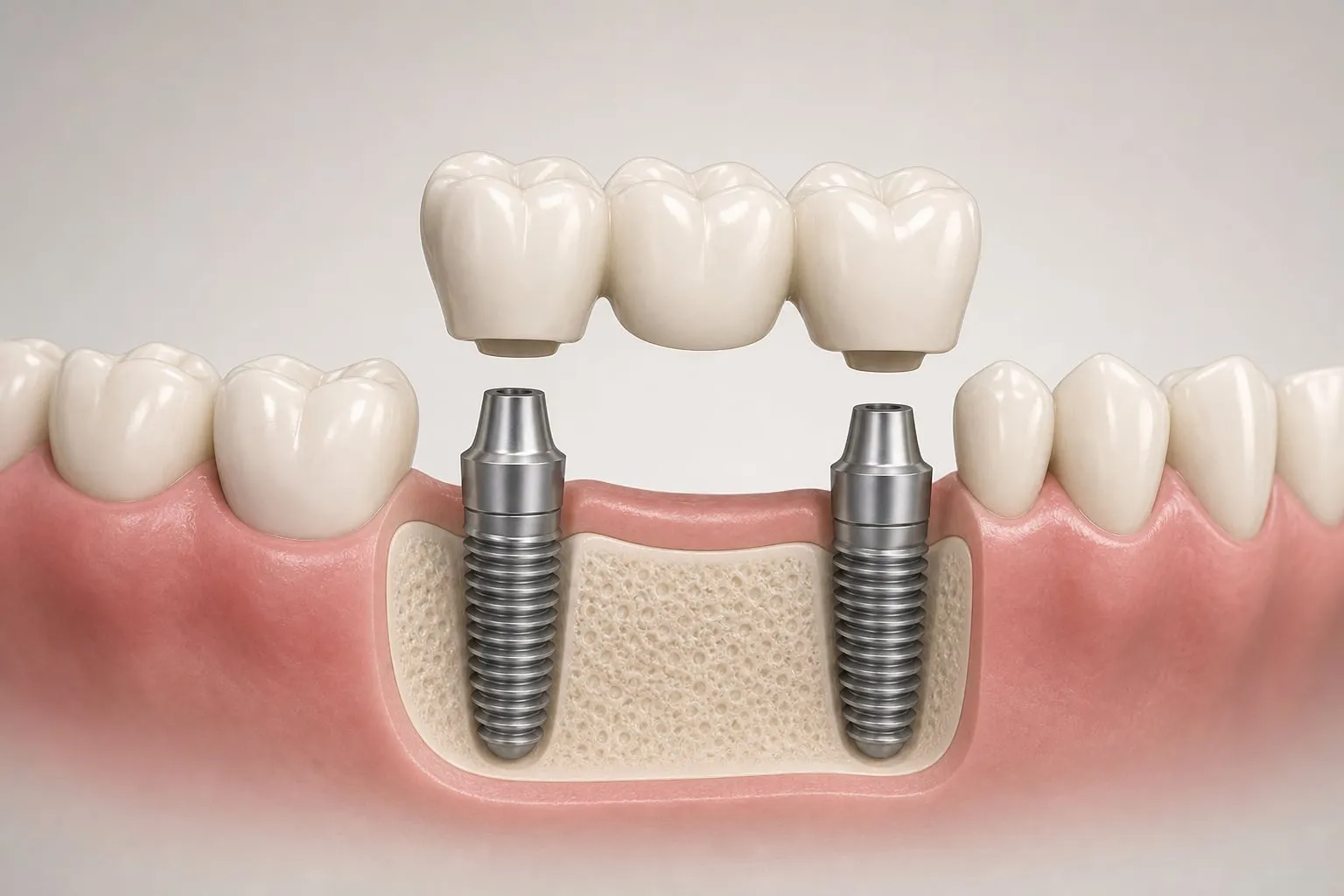
A dental bridge fills the gap by placing crowns on the two neighboring teeth and suspending a false tooth between them. Those neighboring teeth carry the load.
Your neighboring teeth
This is one of the biggest differences. To place a traditional bridge, the healthy teeth on either side of the gap must be reshaped to hold the anchoring crowns. That means altering teeth that were otherwise fine.
An implant leaves your neighboring teeth untouched. For many patients, protecting healthy teeth is a compelling reason to consider an implant.
Bone health
When a tooth is lost, the jawbone beneath it gradually shrinks without stimulation. An implant acts like a natural root and helps preserve that bone. A bridge sits above the gum line and doesn’t provide the same stimulation, so bone loss can continue underneath. If you’re already concerned about bone loss, this is worth discussing.
Durability and maintenance
With good oral hygiene and routine visits, an implant is designed to be a long-term solution. Bridges are durable too, but they often need replacement after several years, and the anchor teeth can be vulnerable to decay over time. Both are cared for with regular brushing and cleaning, though a bridge requires a little extra technique to clean underneath.
Longevity always varies by individual, oral hygiene, and habits — no result is guaranteed.
Time and cost
A bridge can sometimes be completed faster, since it doesn’t require the healing period an implant needs to integrate with bone. It may also have a lower up-front cost.
An implant is an investment, starting at $1,995 for a single tooth (covering consultation, surgery, and crown). Pricing may vary based on individual needs, and additional procedures such as bone grafting or extractions may be quoted separately. Many patients feel the long-term benefits justify it, and financing options can ease the cost.
So which is right for you?
Here’s a quick way to think about it:
- An implant may suit you if you want to protect neighboring teeth, preserve bone, and invest in a long-term solution.
- A bridge may suit you if you’re looking for a faster timeline or lower up-front cost, or if the neighboring teeth already need crowns.
There’s no universal answer — the right choice depends on your specific teeth, bone health, and goals. A personalized evaluation is the clearest way to compare them for your mouth. If you’re missing more than one tooth, our guide on replacing multiple teeth is a helpful next read.
Ready to take the next step?
Let’s look at your options together and find the approach that fits you. Request an appointment online or call (949) 773-4170 to schedule an evaluation at our Mission Viejo office. Questions first? See our FAQ or contact us.
This article is for general educational purposes only and is not a substitute for professional dental advice, diagnosis, or treatment. Individual results vary, and only a personalized evaluation can determine whether a particular treatment may be an option for you.