All-On-4 dental implants can restore a full arch of teeth using just four implants — but here’s something many patients don’t realize: treating the upper jaw and the lower jaw isn’t identical. The concept is the same, yet the anatomy differs in ways that can shape your plan, your healing, and what to expect. Here’s a friendly overview.
Same idea, different terrain
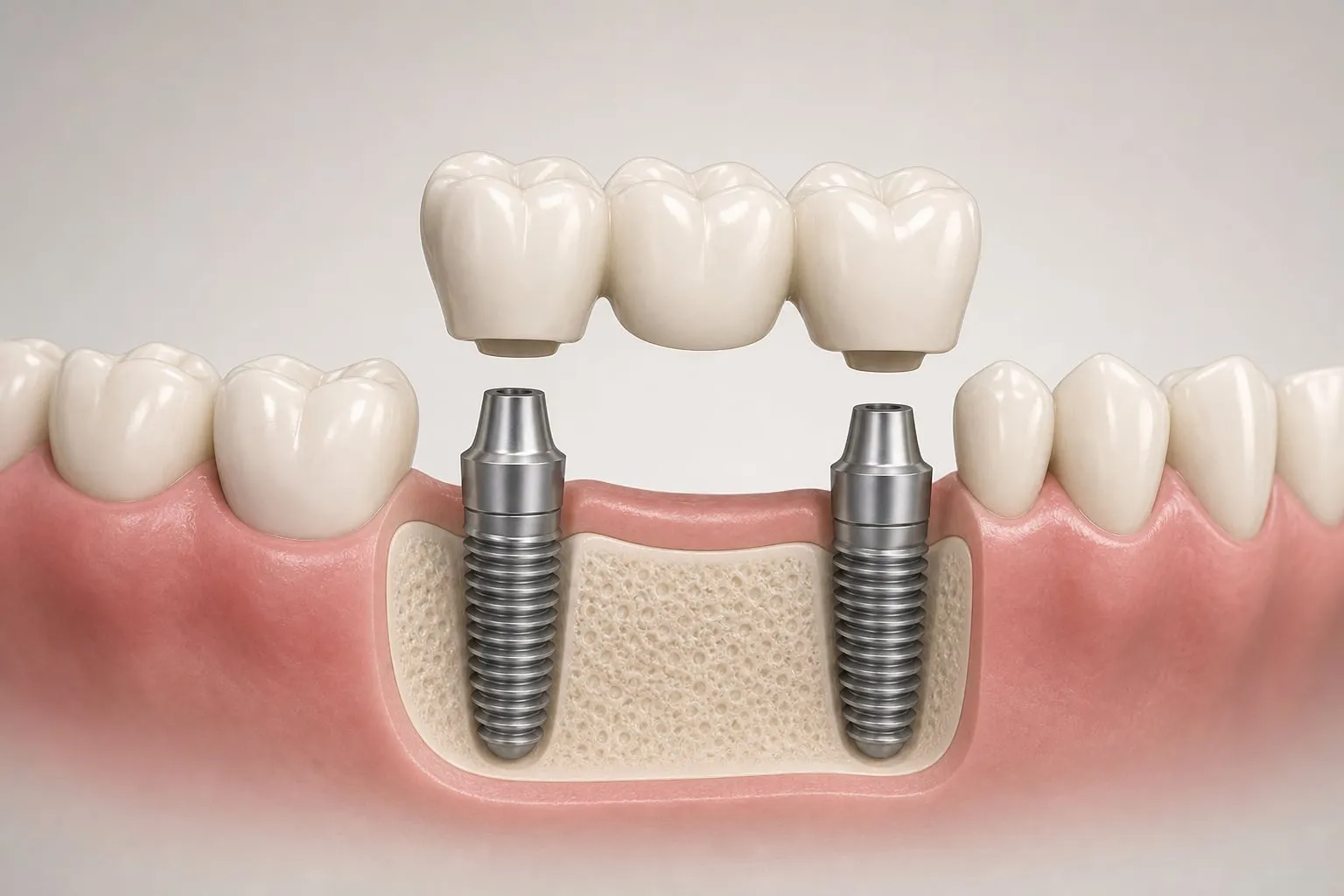
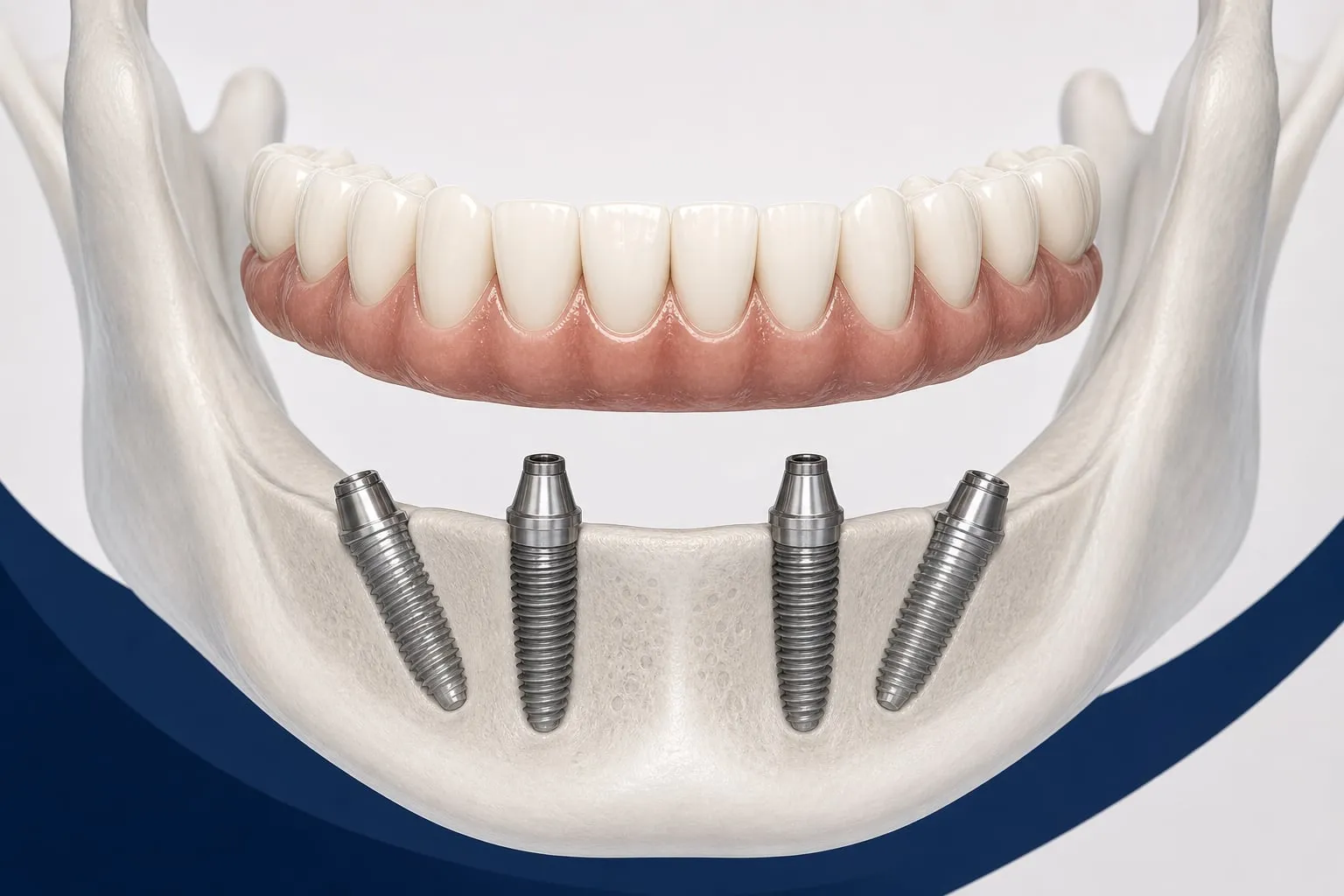
Whether upper or lower, All-On-4 works the same way: four implants are placed at strategic angles to support a fixed, full-arch set of teeth. The angled placement takes advantage of your available bone, which often reduces or avoids the need for grafting.
The difference lies in the terrain — the bone and structures each jaw presents.
The lower jaw (mandible)
The lower jaw is generally made of denser bone. That density can be an advantage for implant stability, and many patients find lower-arch planning relatively straightforward. The main structure to work around is the nerve that runs through the lower jaw, which careful 3D planning helps us map and avoid.
The upper jaw (maxilla)
The upper jaw tends to be softer, and it sits near the sinus cavities. Because of this, upper-arch All-On-4 often calls for extra planning precision. The angled placement of the rear implants is especially valuable here, as it can help avoid the sinuses and make the most of available bone. In some situations, additional steps may be recommended.
None of this should be intimidating — it simply means the upper arch benefits from thoughtful, imaging-guided planning, which is standard in modern implant dentistry.
What this means for healing
Because bone density differs, healing timelines can vary between the arches and from person to person. Both upper and lower All-On-4 involve a period of integration, during which the implants fuse with the bone. You’ll typically wear a fixed temporary arch while this happens. Our post on how long All-On-4 healing takes goes into more detail.
Healing always varies by individual, so we monitor your progress and guide you along the way.
Can you do both arches?
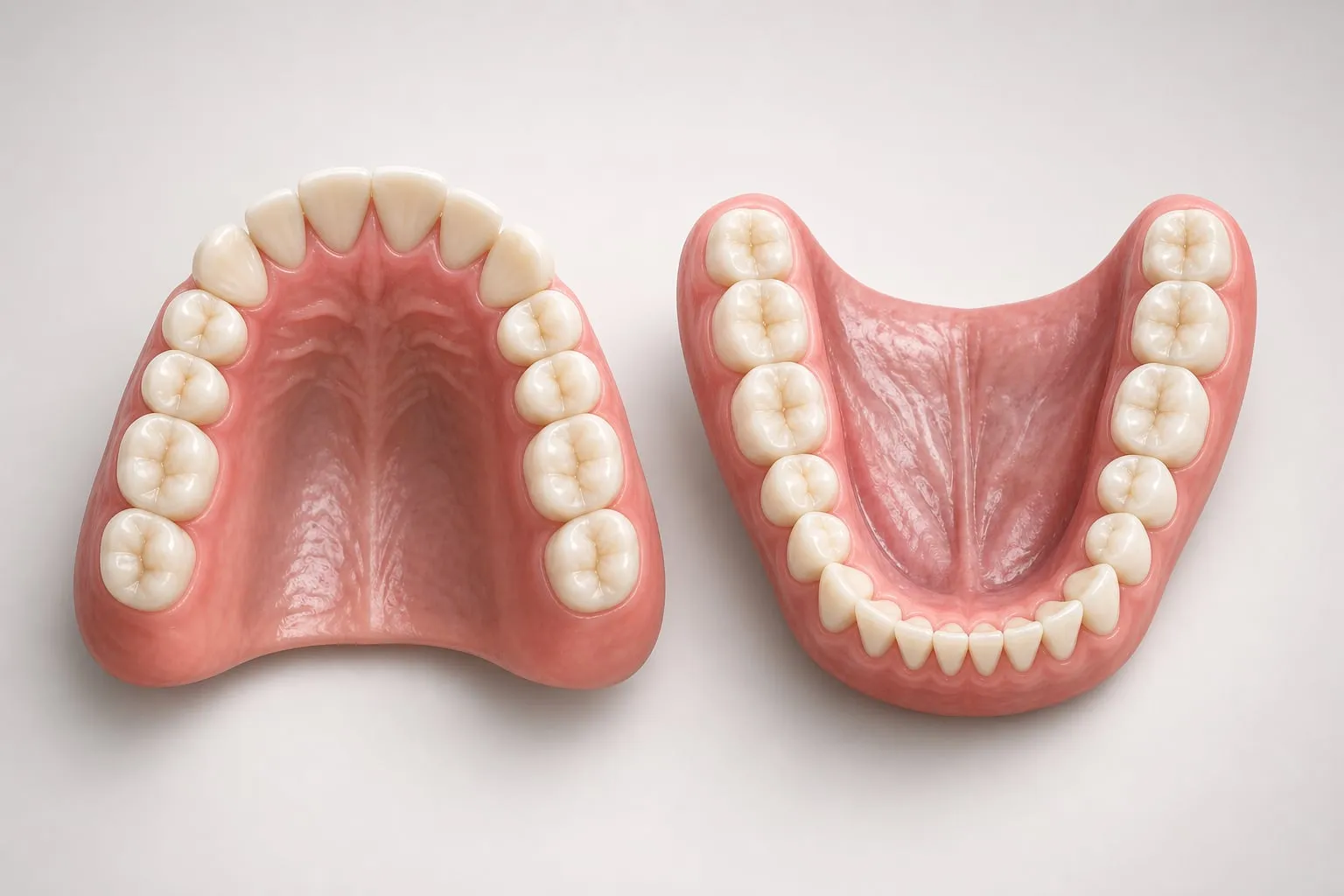
Absolutely — many patients restore both the upper and lower jaw. Each arch is planned individually based on its bone, your bite, and your goals, so you get a result that fits and functions well together.
Planning is everything
The takeaway is that precise planning matters, and it’s tailored to each arch. Using 3D imaging, we assess your bone, map important structures, and design implant placement for a stable, natural-looking result. If you have concerns about bone loss, we’ll factor that in.
On cost: full-arch treatment is quoted based on your needs, and treating one arch differs from treating two. Pricing may vary based on individual needs, and additional procedures such as bone grafting or extractions may be quoted separately. Our financing options can help.
Ready to take the next step?
Whether you’re restoring your upper arch, lower arch, or both, we’ll build a plan around your anatomy and goals. Request an appointment online or call (949) 773-4170 to schedule an evaluation at our Mission Viejo office. Questions first? See our FAQ or contact us.
This article is for general educational purposes only and is not a substitute for professional dental advice, diagnosis, or treatment. All-On-4 involves oral surgery, which carries risks that should be discussed with your provider. Individual results vary, and only a personalized evaluation can determine whether treatment may be an option for you.